Robert Delaney, Malvika Murkumbi, Mayra Nassef, and Andrea Bidnic
A year in student accommodation is a rite of passage for most undergraduate students at UCL. From the luxury of Garden Halls to the abject squalor of Ifor Evans, UCL accommodation is diverse in its residents, rents, and general demeanour. As such, there is a great disparity in the quality of each hall.
Regardless of where you found yourself living (or surviving) in your first year, if you’ve been at UCL for a while, you will have some knowledge of the recurrent maintenance issues that persistently arise. From mice to menacing arsonists, accommodation maintenance has consistently been a problem at UCL, with the university seemingly doing very little to solve the issues at hand.
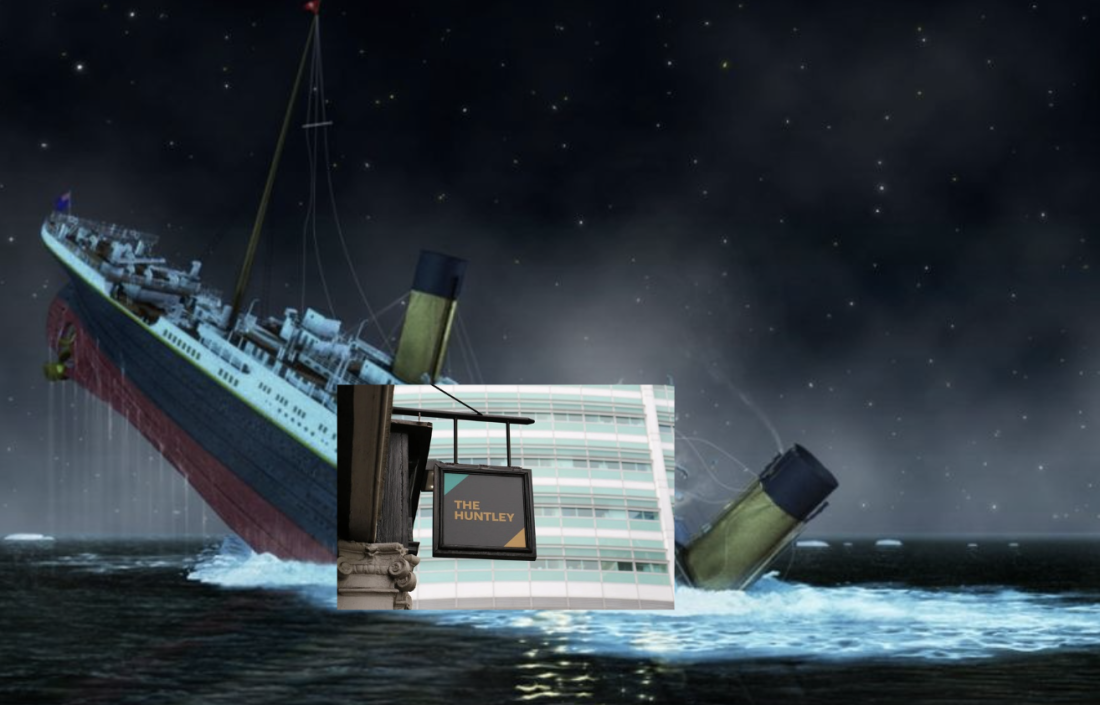
In the 2023-24 academic year, things seem to have gotten worse for the residents of UCL’s halls of residence. Issues ranging from rodent infestations to flooding have not been confined to UCL’s main campus. Whilst mice reappeared in SSEES and the Rare FM studio, they have also managed to wriggle their way back into Schafer House and the UCL Main Library. Whilst the Huntley flooded, so did Ramsay Hall.
Ultimately, the inadequate maintenance of UCL accommodation does not meet the expectations of residents. Many pay upwards of £350 per week to live in halls where people shit in the showers and the structural integrity of their room isn’t guaranteed. This is a failure on behalf of the University.
The diversity of maintenance problems within UCL accommodation is genuinely impressive, and it isn’t just restricted to the same couple of halls.
When temperatures fell below zero in January, residents from Schafer House, St Pancras Way, Ramsay Hall, and John Dodgson House were forced to take several cold showers, owing to recurring plumbing faults. Electricity problems are also reoccurring. The Cheese Grater was also told about both lights and lifts that spend more time broken than working. A frustrated Schafer House resident stated: “I had no lights in my room for about two weeks when I moved in. I complained about it every day but they only fixed it after the second week.”
The resident at John Dodgson House recalls maintenance issues commencing only a few days after moving in. What was initially a leaky shower became an almost floor-wide disaster after “water came through and flooded” her “friend’s room, and two other rooms”.
This resulted in a “massive hole in the ceiling” which was finally fixed by maintenance after three weeks. The Cheese Grater was also told about a myriad of other plumbing issues including water-heating and shower problems. John Dodgson House spent the 2022/2023 academic year under renovation, so it’s peculiar that these maintenance issues are so prevalent.
Similarly, over at Ramsay Hall, residents have also become resigned to the constant plumbing issues: clogged toilets, heating issues, and four separate floods. The toilets also appear to be poorly ventilated and smell foul – “It always smells really odd and they don’t seem to be doing anything about it,” a resident commented. Another student’s dripping sink was not fixed all term, despite them reporting it.
Unsurprisingly, Schafer House faces a similar grim story, once again exemplifying UCL’s profound negligence when it comes to the quality of maintenance: faulty heating, mice, mouldy seats, and lights being out for extraordinarily long periods of time.
Intercollegiate halls and external student accommodations affiliated with UCL seem to also be subject to the same hassles as UCL-only accommodations. Garden Halls, which is intercollegiate, has also been having toilet-related issues. A resident described issues with her “toilet flusher” which “keeps breaking”. “They keep fixing it cheaply” she continued, highlighting the poor quality of UCL’s repairs and their unwillingness to solve issues long-term.
She also told The Cheese Grater about the poor quality of the hall’s catering, describing “mouldy oranges” and “fermented pineapple juice” that have clearly “gone off”. Residents at external accommodations, namely Urbanest King’s Cross and Unite St. Pancras Way, also reported heating issues.
Temperatures tend to operate in a pendulum swing, often being “scalding” hot or freezing cold. For Urbanest King’s Cross, this is reportedly a water temperature issue, whilst for St. Pancras Way, it is more of a room temperature matter as described by a resident: “it’s always too hot or too cold”. They explained that either “the radiator either doesn’t turn on or doesn’t turn off.” What is apparent is how unfair it is that residents have to be consistently uncomfortable in accommodation they have paid so much money to stay in.
Despite frequent reporting of these maintenance issues by residents, they seem to keep coming up, and it appears that requests for maintenance upkeep are completely ignored. Residents of both Ramsay Hall and John Dodgson House told The Cheese Grater that when they reported issues to the reception, they were recorded on a piece of paper and subsequently ignored.
When Housing and Accommodation does decide to fix the issue, this can take up to three weeks or even a whole term, only for the problem to return in the near future. A St Pancras Way resident mentioned that, “Every few weeks we get an email about there being no hot water, or [no] water at all, affecting some of the flats.”
“It doesn’t feel like UCL is invested in anything other than quick fixes,” remarked a Ramsay Hall resident. When these issues are ignored or temporarily fixed, reporting them can start to feel pointless – an increasing number of residents have become resigned to the sub-standard maintenance and don’t bother reporting issues anymore. “I don’t feel like I’m being taken very seriously,” a first-year from Ramsay Hall lamented. Ultimately, It seems as though UCL are more concerned about cost-cutting measures than the safety of their students.
There’s an air of reluctant resignation when it comes to the way in which students are dealing with these issues. They are so recurrent that, as one Ramsay Hall resident aptly put it, “people just learn to live with it”, facilitating UCL to continue not acting to permanently fix the repeated issues highlighted above.
While students can try to react to these situations with zest and humour, there’s certainly nothing funny about the expense of living in London. “To have that many maintenance issues when you’re paying that much…”, a John Dodgson House resident expressed, mirroring many of our interviewees’ qualms with the ridiculous gap between price and accommodation quality.
At best, UCL accommodation is a safe and assured place to live in London. For many international students it’s “convenient” to rely on UCL Accommodation as they are new to the country and its complex (and frankly unfair) rental model.
For most students, these maintenance issues can be the “tipping point” when stressed, ill, or when trying to study. “UCL Accommodation is just a terrible landlord” a Ramsay Hall resident states.
The worrying conditions and terrible service to renters is even more deplorable considering UCL increased their accommodation prices by 11.1% last year – the maximum legally authorised based on annual inflation rate. This further exacerbates the cost-of-living crisis for students. A single non-en-suite room in Langton Close, one of UCL’s cheapest halls, rose from £185.50 in 2022/2023 to £204.89 per week this year, further making UCL a place only accessible to the richest students.
When asked about the current situation, the Students’ Union Accommodation & Housing Officer, Lucas Dastros-Pitei, explained that even though “UCL Estates tries their best”, issues “are bound to happen”, adding that “some issues are fixed and solved really quickly, others not so much”. So much for Hall Reps being “elected to represent your needs as students living in UCL Halls and throughout London”.
Lucas also told The Cheese Grater that when he questioned UCL Estates about the repeated floods incidents, he was told it was caused by “unprecedented amounts of rain”.
We would have appreciated to hear his view on other key aspects of the issue, and notably on he concerning rent increase, as “work[ing] with the SU to urge UCL Estates to freeze rent in the face of rising inflation” ranked second amongst his top priorities in his manifesto. He however decided to cut the interview short, despite it being booked in advance.
These interview conditions were incredibly disappointing. The discussion was given over the phone as the officer was walking in a busy street, and he appeared more than hurried to put an end to it. Whilst we understand this is a time-consuming position fulfilled by a full-time student, and that maintenance issues are not directly Lucas’ fault, clear and appropriate communication, as well as standing up for students who elected you as their representative, is vital.
Though UCL’s intentions may be to provide an alternative to the stressful search for standard housing, this is entirely negated by such repetitive maintenance issues which remain unattended to. Evidently, it’s incredibly unfair that students pay so much money to live with leaks, broken locks, broken lights, heating issues, and flooding amongst a plethora of other problems.
Students deserve to live in spaces where they can feel safe and at home, instead of having to consistently report that their toilet doesn’t flush. We can only hope that one day UCL Accommodation decides to start taking maintenance issues more quickly and seriously.
This article appeared in CG 87.